Toyota Lease: The Complete Guide to Costs, Terms, and How It Works
Leasing a Toyota lets you drive a new vehicle for a fixed monthly payment without owning it at the end of the term, typically for 24 to 60 months. It usually costs less per month than financing the same vehicle, but you don’t build equity, and mileage limits apply.
This guide breaks down exactly how a Toyota lease works, what determines your monthly payment, which models offer the strongest lease value, and how to avoid the fees and mistakes that catch first-time lessees off guard.
What Is a Toyota Lease and How Does It Work?
A Toyota lease is essentially a long-term rental agreement arranged through Toyota Financial Services or a participating dealership. You pay for the vehicle’s depreciation over the lease term, plus interest (called the “money factor”) and applicable taxes and fees, rather than paying for the full purchase price.
At the end of the lease, you have three options: return the vehicle, buy it at a predetermined residual value, or lease or finance a new Toyota.
Key Components of a Lease Payment
Every lease payment is built from four elements:
- Capitalized cost: the negotiated price of the vehicle, similar to the purchase price when financing.
- Residual value: an estimate of what the car will be worth at lease-end, set at the start of the contract based on the model and term.
- Money factor: the lease’s interest rate, expressed as a small decimal (multiply by 2,400 to approximate the APR).
- Lease term and mileage allowance: typically 36 or 39 months with 10,000, 12,000, or 15,000 miles per year.
A higher residual value generally means a lower monthly payment, because you’re financing less of the car’s depreciation. This is why models with strong resale value, such as the Tacoma and RAV4, often lease more competitively than models that depreciate faster.
- Read more: Toyota Lease
Leasing vs. Buying: Which Makes More Sense?
Leasing suits drivers who want lower monthly payments and a new car every few years; buying suits those who drive high mileage or want long-term ownership without restrictions.
| Factor | Leasing | Buying (Financing) |
| Monthly payment | Usually lower | Usually higher |
| Down payment | Often lower or $0 | Varies, often higher |
| Mileage limits | Yes (typically 10,000–15,000 mi/year) | None |
| Equity/ownership | None; return at lease-end | Builds equity toward ownership |
| Customization | Restricted | Unrestricted |
| Long-term cost | Higher if you lease repeatedly | Lower once the loan is paid off |
| Best for | Drivers who want a new car every 2–3 years | Drivers who keep vehicles 6+ years |
If you drive fewer than 12,000 miles annually, keep vehicles in good condition, and prefer driving the latest model with the newest safety tech, leasing is usually the more cost-efficient short-term choice. If you drive long distances or want to eventually own the car outright, financing typically wins over a five-to-seven-year horizon.
What Affects Your Monthly Payment?
Several variables shape a lease quote, and they shift regularly, so treat any advertised price as a starting point rather than a guarantee.
Model and Trim
Pricing varies significantly by model. Vehicles with strong resale value, such as the Tacoma, Tacoma Hybrid, and RAV4 Hybrid, tend to offer stronger value because their residuals stay high. Newer or larger vehicles, including the Crown Signia Hybrid and Corolla Cross, can carry comparatively weaker terms depending on current incentives.
Term Length and Mileage
Shorter terms (24–36 months) generally carry higher residual values and can lower monthly costs, while higher mileage allowances (15,000 vs. 10,000 miles/year) raise the payment because the car depreciates faster.
Region and Dealer Incentives
National offers exist, but individual dealerships can add to or subtract from these based on regional financing incentives, inventory levels, and local demand. The same trim can be priced noticeably differently in different states or cities.
Credit Score
Approval and money-factor pricing depend on creditworthiness, similar to an auto loan. Buyers with top-tier credit typically qualify for the lowest advertised rates; those with average credit may see a higher money factor added to the base offer.
Trade-In or Down Payment
A trade-in or upfront payment reduces the capitalized cost and lowers the monthly payment, but it’s generally wise to keep money down as low as reasonably possible, since that amount isn’t recoverable if the vehicle is totaled or stolen early in the term.
What to Expect From Current Offers
Terms change monthly and vary by region, so always confirm current pricing directly with a dealership before treating any figure as final.
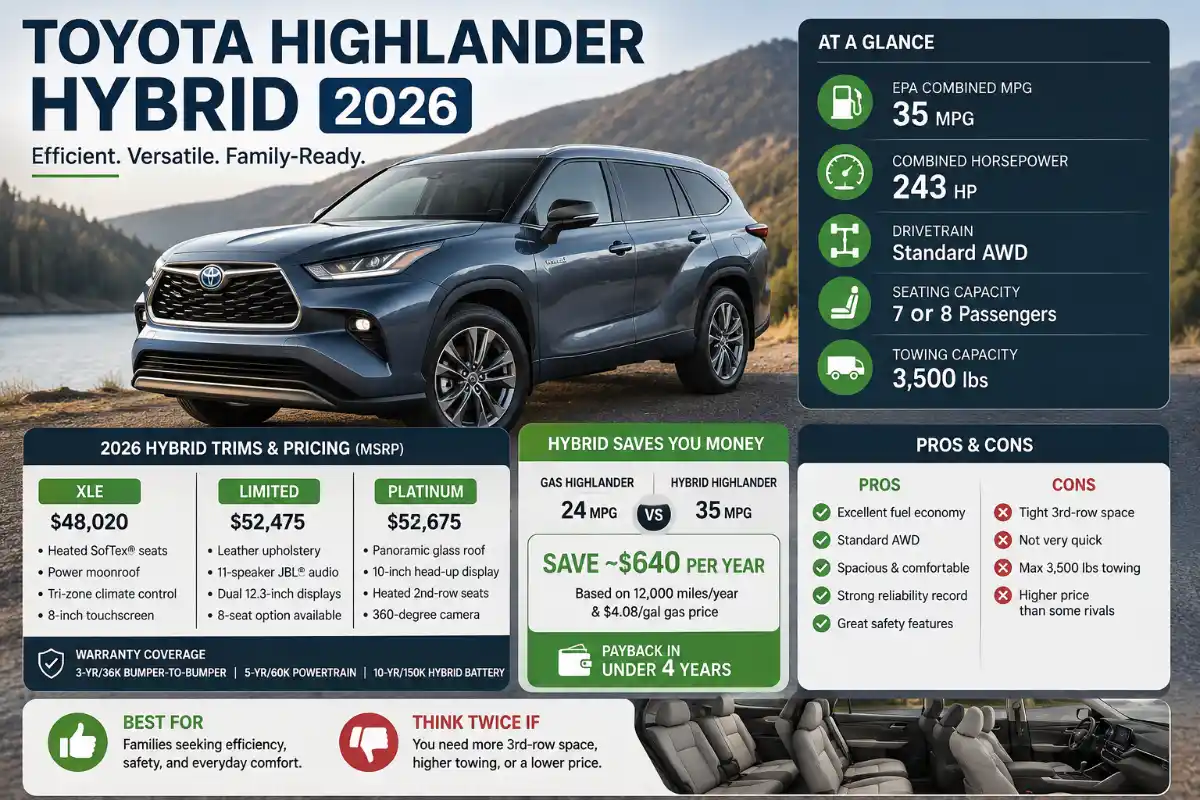
As a general pattern, compact and midsize models like the Corolla, Camry, and RAV4 tend to anchor the most accessible offers, often requiring a few thousand dollars due at signing on 36-month terms with 10,000 annual miles. Trucks and larger SUVs, such as the Tundra, Highlander, and Grand Highlander, typically carry higher monthly payments but can still offer strong relative value when residuals are high or when targeted incentives apply to hybrid variants.
Special financing sometimes runs alongside lease offers, including reduced-APR options for qualified buyers, so it’s worth comparing both paths before deciding.
How to Verify a Real Offer
- Check region-specific offers by entering your ZIP code on an official pricing tool.
- Confirm the term length, annual mileage allowance, and amount due at signing – these three numbers determine the real cost, not just the monthly payment.
- Ask the dealer for the money factor and residual value in writing.
- Check whether the advertised payment already includes taxes, title, and acquisition fees, or excludes them.
- Compare at least two dealerships, since dealer markup on the money factor can vary even within the same region.
Fees to Expect
Understanding fees upfront prevents surprises at signing and at lease-end.
- Acquisition fee: a one-time charge, commonly a few hundred dollars, for setting up the lease.
- Disposition fee: charged when you return the vehicle at lease-end if you don’t lease or finance another vehicle from the same brand.
- Excess mileage fee: charged per mile over your contracted allowance, so estimate your annual driving realistically before choosing a mileage tier.
- Excess wear-and-tear charges: for damage beyond normal use, assessed at inspection.
- Early termination fee: applies if you end the agreement before the agreed term.
Some lessees also have access to a Multiple Security Deposit program, which allows prepaying several security deposits upfront to reduce the money factor and lower the monthly payment – a useful option for buyers with available cash who plan to keep the lease for its full term.
What Happens at the End of the Term?
You choose one of three paths: return the vehicle and walk away, purchase it at the pre-set residual value, or roll into a new agreement. Most dealers inspect the car for excess wear and confirm mileage before finalizing the return, and any overage fees are settled at that time.
If the vehicle’s market value at lease-end is higher than its residual value, buying it out can be a smart move, since you’d be purchasing below the current market price. This has become more common during periods of high used-car demand, so it’s worth checking your vehicle’s market value a few months before the term ends.
Best Models for Lease Value Right Now
Value depends on how well a model holds its resale price relative to its cost, not just the advertised monthly payment.
- Tacoma / Tacoma Hybrid: strong residual values make these consistently competitive among midsize trucks.
- RAV4 Hybrid: solid resale value combined with strong fuel economy appeals to buyers prioritizing efficiency.
- Corolla: typically the most accessible entry point for a low monthly payment.
- Camry: balances a moderate payment with a comfortable, well-reviewed sedan.
- Sienna Hybrid: strong value among hybrid minivans for larger families.
Models that have shown comparatively weaker value in recent months include the Corolla Cross and Crown Signia Hybrid, largely due to lower residual values relative to their price. This can shift monthly, so re-check current standings before committing.
Common Mistakes to Avoid
- Underestimating annual mileage: choosing the 10,000-mile tier to save on the monthly payment, then paying steep overage fees at return.
- Rolling negative equity from a trade-in into the contract: this raises the capitalized cost and payment without being obvious on the sticker.
- Skipping lease-end inspection prep: minor dents, tire wear, or missing accessories can trigger wear-and-tear charges that are avoidable with a pre-return inspection.
- Ignoring the money factor: dealers sometimes mark this up; ask for the buy rate and compare it against your credit tier.
- Assuming pricing is identical everywhere, regional and dealer-level differences on the same terms can be substantial.
Frequently Asked Questions
Is it cheaper to lease or buy a Toyota?
Leasing typically has a lower monthly payment because you’re only paying for the vehicle’s depreciation during the term, not its full value. However, buying is usually cheaper over the long run if you keep the vehicle for six or more years, since a lease requires ongoing payments with no equity built. The better choice depends on how long you plan to keep the car and how many miles you drive annually.
What credit score do I need to qualify?
The lowest advertised rates are generally reserved for applicants with strong credit, often in the upper range of credit scoring tiers. Buyers with average or fair credit can often still qualify, but typically at a higher money factor, which raises the monthly payment. It’s best to check your credit report and get pre-qualified before visiting a dealership.
Can I negotiate the price?
Yes. The vehicle’s capitalized cost, the negotiated selling price, is negotiable just like a cash purchase, and it directly affects your monthly payment. The money factor can sometimes be negotiated, too, especially if you have strong credit and the dealer has marked it up above the base rate. Residual values and mileage tiers, however, are typically fixed by the financing arm and are not negotiable.
What happens if I go over my mileage limit?
You’ll be charged a per-mile fee for every mile driven beyond your contracted allowance, assessed when you return the vehicle. This fee is disclosed in your contract and can add up quickly if you consistently underestimate your driving. If you expect to exceed your original mileage tier, it’s often cheaper to add miles upfront through your dealer than to pay the fee at lease-end.
Can I end the agreement early?
Yes, but early termination usually comes with a fee, and you may still owe the remaining depreciation and interest charges built into the contract. Some drivers choose to transfer their agreement to another party through a lease-transfer marketplace instead of terminating early, which can reduce or eliminate termination costs. Contact your financing provider directly to review your specific contract’s early termination terms before deciding.
Do I need a down payment?
No, many agreements can be structured with $0 or minimal cash due at signing, though this typically raises the monthly payment. Dealers often advertise a price that assumes a down payment, so it’s important to ask for the $0-down monthly figure separately. Financial advisors generally recommend keeping money down low since a down payment is not recoverable if the car is stolen or totaled early in the term.
What is a money factor?
The money factor is the interest rate applied to the agreement, expressed as a small decimal, such as 0.00125, rather than a percentage. To estimate the equivalent APR, multiply the money factor by 2,400. It’s determined largely by your credit score, and asking the dealer for the “buy rate” money factor helps ensure you’re not being charged a marked-up rate.
Can I buy the vehicle at the end of the term?
Yes, every standard agreement includes a purchase option at a residual value set at the start of the contract. If the vehicle’s current market value exceeds its residual value, buying it out can be a good deal, since you’d be paying below market price. Check the vehicle’s market value a few months before the term ends to decide whether buying out makes financial sense.
What is the difference between a lease and a subscription?
A lease is a fixed-term contract, typically 24 to 39 months, with a set monthly payment and mileage allowance. A subscription, where offered, is a shorter-term, more flexible arrangement that can bundle insurance and maintenance, but usually costs more per month and offers less long-term savings than a standard lease. Subscriptions suit drivers who want short-term flexibility over cost savings.
Are offers the same at every dealership?
No. While base offers are set nationally, individual dealerships can add markups or, in competitive markets, additional discounts on top of the advertised rate. Regional incentives also vary, so the same trim can be priced differently in different cities or states. Always compare offers from at least two dealerships in your area before signing.